
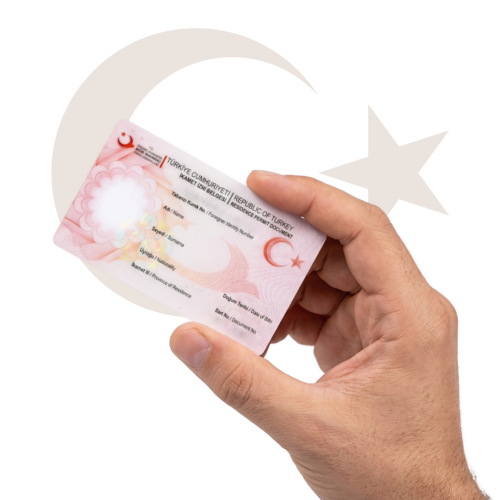
Why You Need a Residence Permit (Ikamet)
A Turkish Residence Permit allows foreigners to stay in the country for longer than 90 days or beyond the duration of a visa. Depending on the type, this status opens up opportunities for living, working, and doing business. Turkey offers short-term permits (up to 1 year) and long-term permits that do not require renewal.
Getting a Residence Permit in Turkey is the key to a comfortable life and business operations. Here are the main benefits:
-
Business Opportunities. Turkey is ideally located for trade between Europe and Asia. Key industries include pharmaceuticals, chemicals, food processing, tourism, textiles, leather goods, and construction. Major players include ENKA (construction), Efes (beverages), and Koç Holding. To register a company in Turkey, you need: -
Turkish Tax ID (Vergi Numarası); -
Passport; -
Company Articles of Association; -
Memorandum of Association or Shareholders' Agreement; -
Chamber of Commerce registration form; -
Signature Circulars (specimen signatures of directors); -
Consent to act as director (for external directors); -
Asset valuation report (if applicable), proof of ownership, and non-encumbrance certificate; -
Receipt of fee payment; -
Registration application; -
Bank statement proving capital availability; -
For Joint Stock Companies (A.Ş.) — receipt showing deposit of 25% of capital. The founder must submit documents to the Chamber personally, and to the bank for account opening.
-
-
Low Cost of Living. Living costs in Turkey are significantly lower than in the EU. For example, renting a one-bedroom apartment in the city center: Ankara — $530, Istanbul — $720, Izmir — $550. -
Pathway to Citizenship. After 5 years with a Turkish Residence Permit, you can apply for a passport. Alternatively, citizenship by investment (real estate from $400,000) takes 6–8 months. Other routes include bank deposits, business creation, bonds, or funds. -
Mortgages for Foreigners. Holders of a Residence Permit can buy property on credit. Minimum interest rates start around 1.2% per month. Documents for a mortgage: -
Application form; -
Turkish Tax ID; -
Notarized copy of passport; -
3 months of bank statements; -
Credit history report; -
Proof of income; -
Proof of property ownership in home country; -
TAPU (Title Deed) of the property being bought; -
Property appraisal report.
-
-
High-Quality Healthcare. Turkey is a leader in medical tourism, spending 5% of its GDP on healthcare. Many clinics are JCI accredited.
How to Move to Turkey and Get a Residence Permit
There are roughly 20 ways to get a Residence Permit: 15 short-term types (up to 2–5 years), long-term (after 8 years), student, family, humanitarian, and permits for victims of human trafficking.
-
Short-Term Residence Permit: For study, research, business, medical treatment, or tourism. Validity: up to 2 years (up to 5 years for investors and citizens of Northern Cyprus). -
Long-Term Residence Permit: Indefinite validity, available after 8 years of holding a short-term permit. -
Family Residence Permit: For spouses and children. The sponsor (with valid residence/citizenship) must have an income (min. 1/3 of minimum wage per family member — approx. $580), health insurance, a registered address, and no criminal record. Validity: up to 3 years. -
Student Residence Permit: For school children, university students, or course attendees. Universities include Hacettepe (from $3,600), Bilkent (from $14,800), Sabancı (from $17,000), METU (from $130), and Koç (from $21,500). Turkish level B1+ required. Validity: duration of study. -
Humanitarian Residence Permit: For children, deportation cases, or emergencies. Validity: up to 1 year. -
Permit for Victims of Human Trafficking: 30 days, renewable up to 3 years.
Types of Short-Term Residence Permits
-
Tourism: Up to 1 year (requires proof of travel plans/hotel bookings). -
Medical Treatment: Based on a contract with a clinic. -
Business: Up to 3 months, requires an invitation from partners. -
Scientific Research: With permission from the relevant ministry. -
In-Service Training: Based on agreements (e.g., with Azerbaijan). -
Student Exchange: Like Erasmus (requires B2 English/Turkish, 2 years at a uni). -
Turkish Language Courses: Renewable up to 2 times, requires accredited courses. -
Public Agency Internships: Up to 1 year, expenses covered by the institution. -
Post-Graduation: Up to 1 year, applied for within 6 months of graduation. -
Loss of Family Support: After 3 years, in case of death/divorce. -
By Guarantor: For relatives, with guarantor documentation. -
Judicial Decisions: Valid until the end of court proceedings. -
For Northern Cyprus Citizens: Valid for 5 years. -
Real Estate Ownership: Up to 2 years, property value from $200,000. -
By Investment: Valid for 5 years, from $400,000 (real estate) or $500,000 (other options).
Residence Permit via Renting or Buying Property
Real estate transactions are a primary route to a Turkish Residence Permit.
Rent: Requires a lease of at least 12 months. Grants a 1-year permit. Note: 1,169 neighborhoods (17 in Ankara, 54 in Istanbul) are currently closed to new registrations.
Purchase: Property value must be at least $200,000. Grants a permit for up to 2 years. For families: marriage certificates must be Apostilled.
Required Documents:
-
Notarized passport copy; -
Lease agreement or TAPU (Title Deed); -
Landlord's ID (for rentals); -
Health insurance; -
Tax ID; -
Biometric photos; -
Utility bills.
Requirement: You must live in Turkey for at least 6 months per year.
Who Can Get a Long-Term Residence Permit?
Available after 8 years of continuous residence. Not available for refugees/humanitarian permit holders. It is indefinite (permanent) but becomes void if you reside outside Turkey for >1 year (exceptions for health/education). Benefits: access to free education/healthcare, right to work, bank loans, and mortgages.
Documents Required for Application
-
Application form; -
Turkish Tax ID; -
4 biometric photos; -
Notarized passport copy; -
Proof of income/Bank statement; -
Health insurance; -
Lease agreement or TAPU; -
For business: Invitation letter.
Step-by-Step Application Process
The process takes up to 4 months:
-
Buy a local SIM card. -
Find housing and notarize the contract. -
Purchase health insurance. -
Translate and notarize documents. -
Get biometric photos taken. -
Submit the online application (e-Ikamet) and choose an interview date. -
Attend the interview (appointment). -
Obtain a Tax ID. -
Wait for the card to arrive by mail (1–3 months).
The Residence Permit Interview
Scheduled upon submitting the online form. Questions usually cover: purpose of stay, job, and income. They may request health reports, criminal records, or marriage certificates. You receive a temporary document after the interview. Do not leave Turkey before the interview; after the interview, you may leave for up to 15 days with notification.
Reasons for Refusal
-
Received social welfare benefits in the last 3 years; -
Insufficient income; -
No valid insurance; -
Threat to public order.
Refusals can be appealed in court within 60 days. If rejected, you must leave Turkey within 10 days.
Validity and Renewal
-
Short-term: 1–5 years, renewable online or in person. -
Long-term: Indefinite.
Citizenship via Residence Permit
You can apply for citizenship after 3 years of marriage to a Turkish national or 5 years of residency.
Fast Track: Citizenship by Investment from $400,000 (Real Estate) or $500,000 (Deposit, Bonds, Business, Funds). Investment return period: 3 years. The passport grants visa-free access to 120+ countries. Read more in our article on “ Citizenship by Investment”.